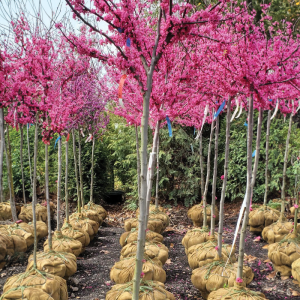

Planting Eastern redbuds in the spring is one of the easiest ways to bring long-lasting beauty and ecological value to a yard or landscape. Known for their clouds of pink to magenta blossoms that appear on bare branches, redbuds are among the first trees to announce the arrival of spring. Their graceful form, manageable size, and wide adaptability make them a favorite for homeowners, landscapers, and nature lovers alike.
Spring is the ideal time to plant redbuds because the soil is warming, moisture is usually more available, and the tree has an entire growing season to establish roots before winter. Whether planted as a specimen tree, along a property line, or as part of a layered garden design, redbuds offer benefits that go far beyond their flowers.
Benefits of Planting Eastern Redbuds in Spring
One of the greatest advantages of planting a redbud is its impact on the landscape. Redbuds are small to medium ornamental trees, typically reaching 20 to 30 feet tall, making them perfect for front yards, patios, and smaller residential lots. Their rounded canopy and heart-shaped leaves create a soft, welcoming appearance that works well in both formal and naturalistic settings. In spring, their branches are covered with vivid blossoms before the leaves emerge, creating a striking visual display. In summer, the lush green foliage provides texture and light shade, while fall often brings yellow tones that extend seasonal interest. Because of their size and structure, redbuds can anchor a garden without overwhelming it.
Redbuds also benefit the home environment in practical ways. A thoughtfully placed tree can improve curb appeal, making a property feel more inviting and well cared for. A redbud near a window, walkway, or porch creates a view that changes beautifully with the seasons. Over time, its canopy can provide gentle shade that helps cool nearby outdoor spaces. Unlike very large trees, redbuds are easier to maintain and less likely to dominate a small yard. Their moderate growth habit makes them a smart choice for homeowners who want the charm of a tree without the scale of a towering oak or maple.
From an environmental standpoint, planting redbuds is a meaningful act. Trees help absorb carbon dioxide, filter pollutants from the air, and contribute to healthier soil. Their roots help reduce erosion, especially on slopes or in areas prone to runoff. Redbuds also support stormwater management by slowing rainfall and helping water soak into the ground more effectively. In urban and suburban settings, adding more trees can reduce heat buildup, soften hardscapes, and improve overall neighborhood resilience. Because Eastern redbuds are native to much of North America, they are well suited to local climates and often require fewer inputs than non-native ornamentals once established.
Perhaps one of the most rewarding reasons to plant a redbud is its value to wildlife. As an early-blooming native tree, it provides an important nectar source for bees and other pollinators emerging in spring. At a time when food sources can still be limited, those flowers help sustain beneficial insects that play a vital role in the ecosystem. Butterflies and native bees are often drawn to redbuds, adding movement and life to the garden. Later in the season, the tree’s branching structure offers shelter and resting places for birds. Even a single redbud can become part of a larger habitat network that supports biodiversity in developed areas.
Planting a redbud in spring is also relatively simple. Choose a site with well-drained soil and full sun to partial shade. Dig a hole about twice as wide as the root ball, set the tree at the same depth it was growing in the container, and water it thoroughly after planting. Mulch around the base to retain moisture, but keep mulch away from the trunk. With regular watering during its first growing season, a redbud can establish quickly and reward you for years to come. To see more information from the PennState Extension, view the article here.
In every sense, Eastern redbuds are more than ornamental trees. They enrich the landscape, enhance the home, support the environment, and provide meaningful resources for wildlife. Planting one in spring is a simple choice that brings beauty and benefit season after season. Shop the Holly Days Nursery selection online! Or join us on location to find your perfect Eastern Redbud.